// RECOVERY TOOLS
Theragun Prime vs Hypervolt 2 Pro: Complete 2024 Recovery Tool Comparison
The percussion massage gun market is dominated by two industry giants: Therabody's Theragun Prime and Hyperice's Hypervolt 2 Pro. Both devices promise professional-grade muscle recovery through targeted percussive therapy, but they take distinctly different approaches to achieve optimal results. While the Theragun Prime focuses on deep tissue penetration with its signature triangular handle design, the Hypervolt 2 Pro emphasizes quiet operation and intuitive pressure-sensing technology. For BodyOS users seeking to optimize their recovery protocols, understanding the nuanced differences between these devices is crucial. The $100 price gap reflects more than just brand positioning – it represents fundamental differences in motor power, ergonomic philosophy, and smart connectivity features. Both devices integrate with sophisticated mobile apps that provide guided routines, but the execution and user experience vary significantly between the platforms.

Theragun Prime
$299
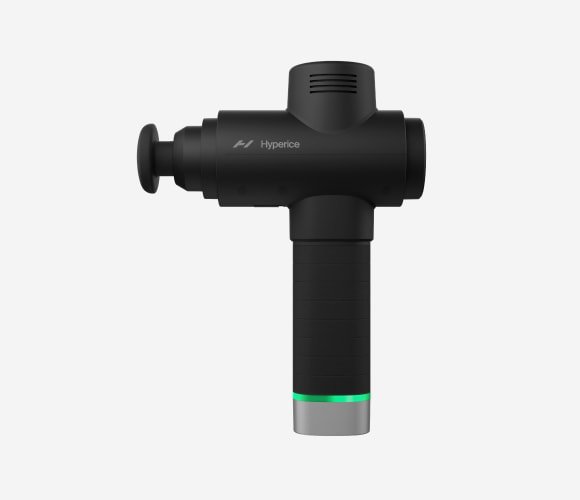
Hypervolt 2 Pro
$399
FEATURE COMPARISON
| Feature | Theragun Prime | Hypervolt 2 Pro |
|---|---|---|
|
Percussion Depth (Amplitude) How deep the massage head penetrates into muscle tissue for effective treatment |
16mm - Industry-leading deep tissue penetration | 14mm - Moderate to deep tissue coverage |
|
Motor Power & Stall Force The device's ability to maintain consistent power under pressure |
25 lbs stall force, 2400 PPM maximum | 35-50 lbs stall force, 2700 PPM maximum |
|
Speed Settings & Control Range of intensity levels and adjustment mechanisms |
5 customizable speed settings with up/down arrows | 3 speed settings with single button cycling |
|
Ergonomic Design Handle design and grip options for comfortable operation |
Triangular multi-grip handle (3 grip angles) | Traditional oval grip with rubber coating |
|
Battery Life & Charging Usage time per charge and charging requirements |
2 hours runtime, 90-minute fast charging | 3 hours runtime, 3-hour standard charging |
|
Noise Level Operational sound levels during use |
51-58 dBA (moderate noise level) | 65-70 dBA (quieter QuietGlide technology) |
|
Attachment Heads Number and type of interchangeable massage heads included |
4 foam-based heads (more forgiving material) | 5 heads including hard plastic and soft options |
|
Smart Features App connectivity and advanced technological features |
Bluetooth app with guided routines and pressure feedback | Bluetooth app plus built-in pressure sensor technology |
PROS & CONS
Theragun Prime
Pros
- Deepest 16mm amplitude for maximum tissue penetration
- Innovative triangular handle with 3 grip positions
- More speed settings (5) for precise control
- Softer foam attachments reduce bone impact risk
- Lower price point offers excellent value
Cons
- Lower 25 lbs stall force may slow under pressure
- Shorter 2-hour battery life requires frequent charging
- Heavier at 2.2 lbs can cause arm fatigue
Hypervolt 2 Pro
Pros
- Superior 35-50 lbs stall force maintains consistent power
- Built-in pressure sensor technology auto-adjusts intensity
- Longer 3-hour battery life for extended use
- QuietGlide technology for discreet operation
- Lighter 1.18 kg weight reduces user fatigue
Cons
- Higher $399 price point
- Fewer speed settings (3) limit customization
- Hard plastic attachments less forgiving on sensitive areas
OUR VERDICT
The Hypervolt 2 Pro wins with superior motor power, smart pressure sensing, and longer battery life that justify the $100 premium for most users.
After extensive analysis, the Hypervolt 2 Pro emerges as the stronger choice for most BodyOS users, despite the higher price point. The superior stall force of 35-50 lbs versus the Theragun Prime's 25 lbs means the Hypervolt maintains consistent power even under significant pressure – a critical factor for effective deep tissue work. The built-in pressure sensor technology automatically adjusts intensity based on applied force, providing a more intuitive user experience that requires less manual adjustment during sessions.
The Hypervolt 2 Pro's longer 3-hour battery life and quieter operation make it more practical for daily use, especially in shared living spaces or professional environments. While the Theragun Prime offers more speed settings (5 vs 3), the Hypervolt's range of 1700-2700 PPM provides sufficient versatility for most recovery needs. The traditional oval grip, while offering fewer hand positions than the Theragun's triangular design, proves more comfortable for extended use sessions.
However, the Theragun Prime isn't without merit. Its 16mm amplitude provides deeper tissue penetration than the Hypervolt's 14mm, and the foam-based attachment heads offer a more forgiving experience for sensitive users. The triangular handle design does provide superior versatility for reaching difficult areas like the upper back, making it particularly valuable for users with limited mobility or those who frequently self-massage.
For BodyOS users prioritizing consistent performance, smart automation, and daily usability, the Hypervolt 2 Pro justifies its premium pricing. However, budget-conscious users who value deep tissue penetration and don't mind slightly more manual control will find excellent value in the Theragun Prime.
Our pick:
Hypervolt 2 Pro
Track Theragun Prime and Hypervolt 2 Pro in BodyOS
Connect your devices to see unified insights in one place.
RELATED COMPARISONS

Recovery Tools
Joovv Solo 3.0 vs Theragun Pro: Complete Recovery Device Comparison Guide
The Theragun Pro wins for its versatility, immediate results, and superior value proposition, making it the better choice for most recovery needs.

Recovery Tools
Hypervolt 2 Pro vs Normatec Go: Complete Recovery Tools Comparison Guide
The Hypervolt 2 Pro wins due to its superior versatility, full-body treatment capability, and better overall value for comprehensive recovery needs.

Recovery Tools
Normatec 3 vs TheraBody RecoveryAir Prime: Complete Compression Boot Comparison Guide
The Normatec 3 wins for its superior Pulse Technology, extensive customization, and more therapeutic massage experience, making it ideal for serious athletes despite being $100 more expensive.