// WEARABLES
Fitbit Charge 6 vs Garmin Vivosmart 5: Complete Fitness Tracker Comparison
The fitness tracker market offers compelling choices for health optimization enthusiasts, with the Fitbit Charge 6 and Garmin Vivosmart 5 representing two distinct approaches to wearable wellness technology. The Charge 6 delivers advanced smart features with built-in GPS and Google integration, while the Vivosmart 5 focuses on lightweight comfort and comprehensive health metrics without subscription requirements. Both trackers target users seeking comprehensive health monitoring beyond basic step counting, offering heart rate tracking, sleep analysis, and stress management tools. However, they diverge significantly in their feature sets and user experience philosophy. The $159 Charge 6 positions itself as a mini-smartwatch with standalone capabilities, while the $149 Vivosmart 5 emphasizes simplicity and extended battery life for continuous health monitoring.

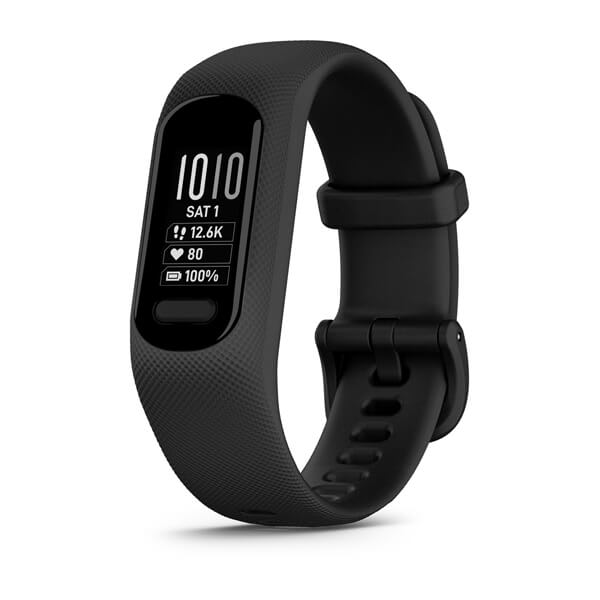
Garmin Vivosmart 5
by Garmin
$149
FEATURE COMPARISON
| Feature | Fitbit Charge 6 | Garmin Vivosmart 5 |
|---|---|---|
|
Built-in GPS Ability to track outdoor activities without a connected smartphone |
Yes - Full standalone GPS with turn-by-turn navigation | No - Relies on connected smartphone GPS only |
|
Display Quality Screen size, type, and visual experience for daily use |
1.04" AMOLED color display with always-on mode | 0.84" grayscale OLED display, no always-on mode |
|
Exercise Modes Number of built-in workout tracking profiles available |
40 exercise modes (doubled from previous generation) | 14 total modes with 10 customizable on-device slots |
|
Smart Features Connected apps and payment capabilities integrated into the device |
Google Maps, Google Wallet, YouTube Music built-in | Garmin Pay, smart notifications, no third-party apps |
|
Health Sensors Advanced biometric monitoring capabilities beyond basic heart rate |
ECG, skin temperature, SpO2, HRV, stress tracking | Pulse Ox, respiration rate, Body Battery, stress tracking |
|
Battery Life Real-world usage time between charges with typical settings |
Up to 7 days (3-4 days with GPS and always-on display) | Up to 7 days (consistently achieves 5-6 days in testing) |
|
Weight and Comfort Physical dimensions and wearability for extended daily use |
37.6g - More substantial feel with premium materials | 26.5g - Ultra-lightweight design, 11g lighter |
|
Subscription Requirements Additional costs required to access full feature set |
Fitbit Premium ($9.99/month) for advanced insights | No subscription required - all features free with Garmin Connect |
PROS & CONS
Fitbit Charge 6
Pros
- Built-in GPS enables phone-free outdoor workouts with accurate tracking
- Google Maps, Wallet, and YouTube Music integration for enhanced functionality
- ECG and skin temperature monitoring for comprehensive health insights
- 40 exercise modes covering diverse activities from surfing to CrossFit
- Bluetooth heart rate sharing with compatible gym equipment
Cons
- Fitbit Premium subscription required for advanced sleep and stress insights
- Heavier design at 37.6g may feel bulky during sleep
- Some users report charging contact issues and skin irritation
Garmin Vivosmart 5
Pros
- Ultra-lightweight 26.5g design ideal for 24/7 wear including sleep
- No subscription fees required - all health features free with Garmin Connect
- Body Battery energy monitoring helps optimize daily activity timing
- Excellent battery life consistently achieving 5-6 days in real-world use
- ANT+ support for connecting to additional fitness accessories
Cons
- No built-in GPS - depends entirely on smartphone for outdoor tracking accuracy
- Smaller grayscale display limits information visibility and user experience
- Fewer exercise modes may not cover specialized activities adequately
OUR VERDICT
The Fitbit Charge 6 wins with its built-in GPS, Google app integration, and larger color display, offering better value despite requiring subscriptions for advanced features.
The Fitbit Charge 6 emerges as the more versatile and feature-rich option for users seeking a comprehensive health and lifestyle companion. Its built-in GPS capability represents a significant advantage for runners and cyclists who prefer phone-free workouts, while the integration of Google apps transforms it into a capable mini-smartwatch. The larger, color AMOLED display enhances usability for navigation and workout data visualization, making it particularly appealing to active users who value real-time information access.
However, the Garmin Vivosmart 5 excels in areas that matter for long-term health monitoring adherence. Its ultra-lightweight design at just 26.5g makes it virtually unnoticeable during sleep and daily activities, while the absence of subscription fees for core features provides better long-term value. The Garmin Connect app delivers superior free analytics, including the innovative Body Battery metric that helps users optimize their energy management throughout the day.
For BodyOS users focused on continuous health optimization, the choice depends on lifestyle priorities. The Charge 6 suits tech-savvy users who want smartwatch functionality with robust fitness tracking, particularly those who exercise independently without their phone. The Vivosmart 5 appeals to users seeking pure health tracking excellence with minimal device management overhead.
Ultimately, the Fitbit Charge 6's superior feature set, standalone GPS capability, and smart integrations justify its $10 premium for most users, making it the stronger overall choice for comprehensive health and fitness optimization.
Our pick:
Fitbit Charge 6
Track Fitbit Charge 6 and Garmin Vivosmart 5 in BodyOS
Connect your devices to see unified insights in one place.
RELATED COMPARISONS

Wearables
Google Pixel Watch 3 vs Apple Watch SE (2nd Gen): Complete Health & Fitness Comparison
The Pixel Watch 3 wins for advanced health tracking and Android users, while the Apple Watch SE offers better value and ecosystem integration for iPhone users.

Wearables
Garmin Forerunner 965 vs Coros Pace 3: Premium vs Budget Running Watch Comparison
The Coros Pace 3 offers better value for dedicated runners, while the Garmin Forerunner 965 justifies its premium price for users wanting comprehensive smartwatch features.

Wearables
Coros Vertix 2 vs Garmin Fenix 8: Complete Multisport GPS Watch Comparison
The Garmin Fenix 8 wins with superior GPS accuracy, heart rate tracking, display quality, and comprehensive features that justify the $300 premium for serious athletes.