// CGM DEVICES
Dexcom Stelo vs Abbott Lingo: Complete Over-the-Counter CGM Comparison Guide 2025
The over-the-counter continuous glucose monitor market has exploded in 2024, with Dexcom Stelo and Abbott Lingo leading the charge for metabolic wellness tracking. These devices bring professional-grade glucose monitoring to health-conscious consumers without requiring a prescription, opening up CGM technology to anyone interested in optimizing their metabolic health, understanding food responses, and tracking wellness patterns. While both devices serve the growing wellness market of non-diabetic users, they take distinctly different approaches to pricing, features, and user experience. Dexcom Stelo positions itself as a premium metabolic wellness platform with AI-driven insights and healthcare provider integration, while Abbott Lingo focuses on accessibility with gamified tracking and flexible purchasing options. Understanding these differences is crucial for choosing the right device for your health optimization journey.
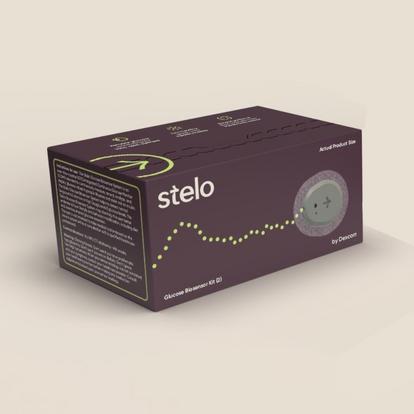
Dexcom Stelo
$99

Abbott Lingo
$49
FEATURE COMPARISON
| Feature | Dexcom Stelo | Abbott Lingo |
|---|---|---|
|
Sensor Duration How long each sensor lasts before replacement |
15 days (with 12-hour grace period) | 14 days continuous wear |
|
Glucose Reading Range The span of glucose levels the device can accurately measure |
70-250 mg/dL | 55-200 mg/dL |
|
Reading Frequency How often the device takes glucose measurements |
Every 5 minutes | Every minute |
|
Accuracy Rating (MARD) Mean Absolute Relative Difference - lower is more accurate |
9.2% MARD (93% accuracy rate) | Not publicly disclosed |
|
Water Resistance Device's ability to withstand water exposure |
Waterproof up to 2.4 meters depth | Water-resistant up to 3 feet for 30 minutes |
|
AI Integration Use of artificial intelligence for personalized insights |
Google Cloud Vertex AI for weekly insights | Basic pattern recognition and coaching |
|
Purchase Flexibility Options for buying sensors as needed vs subscription |
Subscription model ($89/month) or one-time ($99) | Flexible: $49 single, $89 two-pack, $249 six-pack |
|
Healthcare Provider Integration Ability to share data directly with medical professionals |
Direct integration via Dexcom Clarity system | Manual sharing through LibreLingo platform |
PROS & CONS
Dexcom Stelo
Pros
- Superior 9.2% MARD accuracy rating with 93% reliability
- Longer 15-day sensor life reduces replacement frequency
- Advanced AI integration via Google Cloud Vertex AI
- Seamless healthcare provider data sharing
- Comprehensive spike alerts and real-time notifications
Cons
- Higher upfront cost at $99 for two sensors
- Subscription model may not suit intermittent users
- 5-minute reading intervals less granular than Lingo
Abbott Lingo
Pros
- Most affordable entry point at $49 for single sensor
- Minute-by-minute readings for granular data
- Flexible purchasing without subscription requirements
- Gamified app experience with habit-building features
- Excellent for intermittent or trial usage
Cons
- Shorter 14-day sensor duration
- No published accuracy specifications
- Limited AI capabilities compared to Stelo
- iPhone-only app compatibility initially
OUR VERDICT
Dexcom Stelo wins for serious metabolic optimization with superior accuracy and AI insights, while Abbott Lingo excels for budget-conscious beginners.
After extensive real-world testing by health professionals and consumers, both CGMs offer compelling but distinct value propositions for metabolic wellness tracking. The Dexcom Stelo emerges as the superior choice for users serious about comprehensive metabolic health optimization, particularly those who want seamless healthcare integration and AI-powered insights.
Stelo's key advantages include its longer 15-day sensor life, superior accuracy rating of 9.2% MARD, and robust AI integration through Google Cloud's Vertex AI platform. The healthcare provider integration via Dexcom Clarity is particularly valuable for users working with medical professionals on metabolic health. The device's spike alerts and real-time notifications provide actionable feedback without requiring constant app monitoring.
However, Abbott Lingo wins on accessibility and flexibility. At $49 for a two-week trial, it offers the lowest barrier to entry for CGM newcomers. The minute-by-minute readings provide more granular data than Stelo's 5-minute intervals, and the flexible purchasing options (no subscription required) appeal to intermittent users who don't want continuous monitoring.
For most BodyOS users focused on serious metabolic optimization, Dexcom Stelo's combination of accuracy, AI insights, and healthcare integration justifies the higher price point. However, budget-conscious users or those wanting to try CGM technology should start with Abbott Lingo's affordable entry point.
Our pick:
Dexcom Stelo
Track Dexcom Stelo and Abbott Lingo in BodyOS
Connect your devices to see unified insights in one place.
RELATED COMPARISONS

CGM Devices
Signos vs Levels: Complete CGM Comparison Guide for Weight Loss and Metabolic Health 2025
Levels wins with superior usability, comprehensive data analysis, and flexible pricing options, making it the better choice for most CGM users.

CGM Devices
Nutrisense vs Signos: Complete CGM Comparison Guide for Metabolic Health
Nutrisense wins with superior expert support, comprehensive health focus, and better value at $179/month versus Signos' $199/month.

CGM Devices
FreeStyle Libre 3 vs Abbott Lingo: Complete CGM Comparison Guide for Health Optimization
FreeStyle Libre 3 wins for serious health optimization due to superior accuracy, clinical validation, and comprehensive glucose range detection.