// SMART SCALES
Withings Body Comp vs Tanita RD-545: Smart Scale Showdown 2025
Smart scales have evolved far beyond simple weight measurement, offering detailed body composition analysis that can revolutionize your health tracking. The Withings Body Comp and Tanita RD-545 represent two distinct approaches to advanced body composition monitoring, each targeting serious health enthusiasts who want comprehensive insights into their physical condition. The Withings Body Comp positions itself as an accessible entry point into advanced body composition analysis, featuring visceral fat assessment, nerve health monitoring, and vascular age estimation at a $200 price point. Meanwhile, the Tanita RD-545 commands a premium $400 price tag by offering dual-frequency bioelectrical impedance analysis (BIA) with hand electrodes for segmental body scanning and muscle quality scoring. Both devices use bioelectrical impedance technology but implement it differently, making this comparison crucial for users deciding between comprehensive affordability and professional-grade precision.
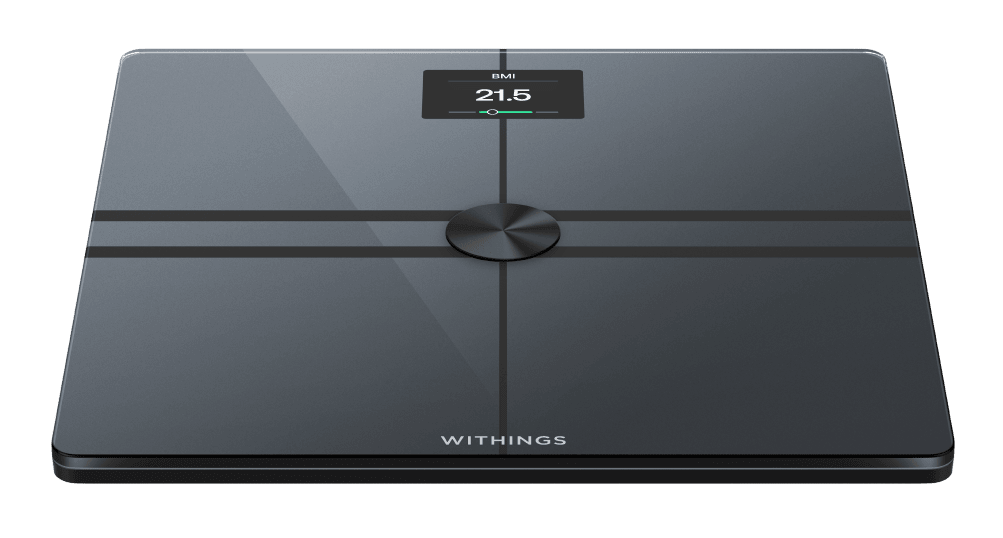
Withings Body Comp
$200

Tanita RD-545
$400
FEATURE COMPARISON
| Feature | Withings Body Comp | Tanita RD-545 |
|---|---|---|
|
Bioelectrical Impedance Technology The type and sophistication of electrical current analysis used for body composition measurement |
Multi-frequency BIA with advanced algorithms | Dual-frequency BIA with hand electrodes |
|
Body Composition Metrics Number and types of health metrics measured and reported |
17+ metrics including visceral fat, nerve health, vascular age | 26 metrics including muscle quality scoring, segmental analysis |
|
Segmental Analysis Capability Ability to analyze body composition in different body regions separately |
Full-body analysis only | Detailed segmental analysis with hand electrodes |
|
Connectivity Options How the device connects to smartphones and health platforms |
Wi-Fi + Bluetooth with automatic sync | Bluetooth only (no Wi-Fi) |
|
Measurement Accuracy (Research-Based) Performance in clinical studies compared to gold-standard methods like DEXA |
±2-4% body fat variance vs DEXA (typical BIA range) | ±1.7-2.6% longitudinal tracking precision per studies |
|
Advanced Health Features Specialized health monitoring capabilities beyond basic composition |
Visceral fat assessment, nerve health, vascular age | Muscle quality scoring, metabolic age, BMR calculation |
|
App Integration & Data Export Quality of companion app and ability to export data to other platforms |
Polished Withings app, Apple Health/Google Fit sync | My Tanita app, limited third-party integrations |
PROS & CONS
Withings Body Comp
Pros
- Exceptional value at $200 with 17+ comprehensive metrics
- Unique health insights including nerve assessment and vascular age
- Wi-Fi + Bluetooth connectivity with automatic syncing
- Polished app integration with major health platforms
- Advanced algorithms for visceral fat estimation
Cons
- No segmental body analysis capability
- Single-point measurement less precise than hand electrode systems
Tanita RD-545
Pros
- Professional-grade segmental analysis with hand electrodes
- Superior longitudinal tracking precision (±1.7-2.6%)
- 26 detailed metrics including muscle quality scoring
- Dual-frequency BIA technology for enhanced accuracy
- Established clinical reputation in professional settings
Cons
- Double the price at $400 with limited additional mainstream value
- Bluetooth-only connectivity requires manual syncing
- Limited third-party app integrations compared to Withings
OUR VERDICT
The Withings Body Comp wins for most users with superior value, unique health metrics, and seamless connectivity, while the Tanita RD-545 excels for athletes needing segmental analysis precision.
The choice between these two smart scales ultimately depends on your specific health tracking needs and budget constraints. The Withings Body Comp emerges as the better value proposition for most health-conscious users, delivering an impressive array of 17+ metrics including unique features like nerve health assessment and vascular age estimation at half the price of the Tanita RD-545.
However, the Tanita RD-545 justifies its premium pricing for serious athletes and fitness professionals who need segmental body analysis. The inclusion of hand electrodes enables detailed limb-by-limb composition tracking that's invaluable for identifying muscle imbalances or monitoring asymmetrical development. Research indicates that Tanita's dual-frequency BIA with segmental analysis typically provides more precise longitudinal tracking, with studies showing ±1.7-2.6% precision for change detection versus the ±2-4% variance common with standard BIA methods.
From a practical standpoint, the Withings Body Comp's Wi-Fi connectivity offers significant convenience advantages over the Tanita's Bluetooth-only connection. Automatic background syncing means your data appears in health apps without manual intervention, while the Tanita requires active Bluetooth pairing for each sync session.
For most BodyOS users focused on comprehensive health optimization rather than elite athletic performance, the Withings Body Comp provides exceptional value with its unique cardiovascular and neurological health insights at a more accessible price point.
Our pick:
Withings Body Comp
Track Withings Body Comp and Tanita RD-545 in BodyOS
Connect your devices to see unified insights in one place.
RELATED COMPARISONS

Smart Scales
Garmin Index S2 vs Eufy Smart Scale P2 Pro: Complete Smart Scale Comparison 2025
The Eufy Smart Scale P2 Pro wins with superior value, comprehensive metrics (16 vs 7), and family-friendly features at one-third the price of the Garmin Index S2.

Smart Scales
Garmin Index S2 vs Withings Body+: Complete Smart Scale Comparison 2024
The Withings Body+ wins with superior accuracy, specialized user modes, and better value at $50 less than the Garmin Index S2.

Smart Scales
Eufy Smart Scale P2 Pro vs Renpho Smart Scale: Complete Comparison Guide 2025
The Eufy Smart Scale P2 Pro wins with superior ITO coating technology, dual connectivity options, and more comprehensive health metrics that justify its $20 premium over the Renpho.